

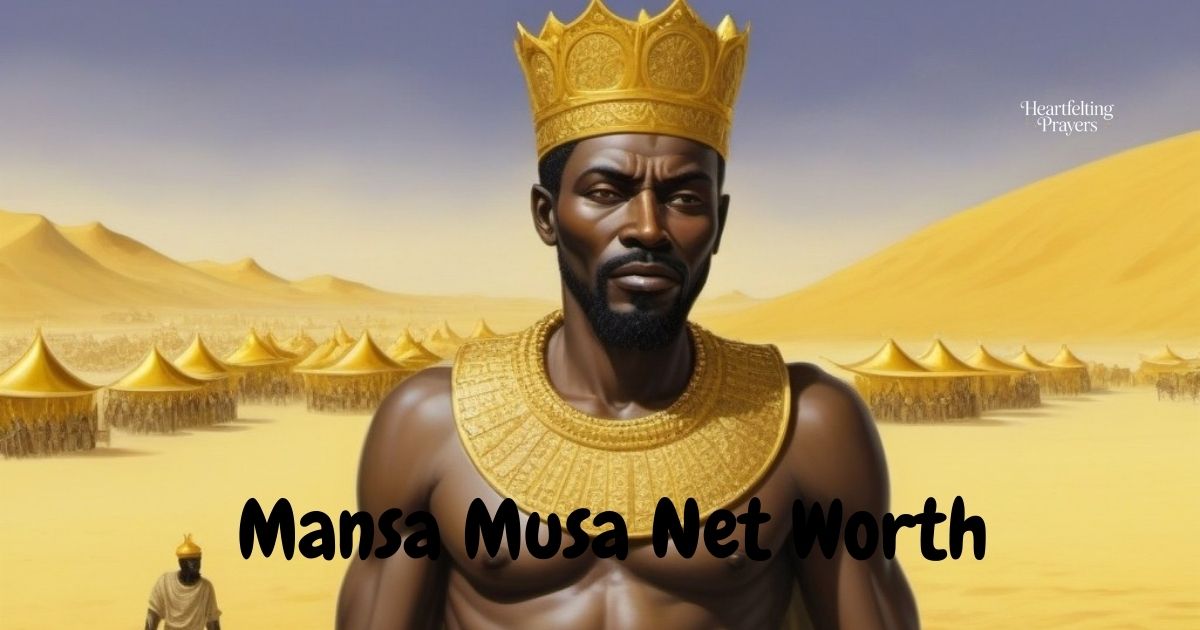
Mansa Musa, born in 1280 in the Mali Empire, was the 10th ruler of one of West Africa’s most powerful empires and is widely regarded as the richest person in history. Mansa Musa net worth of $400 billion in today’s terms. During his reign from 1312 to 1337, he transformed Mali into a center of wealth, trade, and Islamic scholarship.
Musa is best known for his legendary pilgrimage to Mecca, where he traveled with thousands of attendants and distributed enormous amounts of gold, demonstrating his immense wealth to the world. He was also a great patron of education and architecture, commissioning mosques, madrasas, and libraries, including the famous Sankore Madrasah in Timbuktu. Under his leadership, Mali expanded its territory, strengthened its economy, and became a hub of culture and learning, leaving a lasting legacy that endures to this day.
Mansa Musa’s bio
| Category | Details |
|---|---|
| Name | Mansa Musa |
| Title | 10th Mansa of Mali Empire |
| Reign | 1312 – 1337 |
| Born / Died | 1280 – 1332/1337 |
| Net Worth | ~$400 billion |
| Religion | Islam |
| Notable Achievements | Pilgrimage to Mecca, built mosques & Sankore Madrasah, expanded Mali Empire |
Mansa Musa Net Worth
Mansa Musa was the tenth ruler, or Mansa, of the Mali Empire, reigning from 1312 to 1337. He is widely regarded as one of the wealthiest people in history, largely due to the vast amounts of gold produced in Mali during his reign. At the height of the empire, his fortune is estimated to have been the modern equivalent of $400 billion.
Born in 1280 and passing away in either 1332 or 1337, Mansa Musa’s title of Mansa means “King of Kings” or emperor. When he ascended to the throne, the Mali Empire included lands that were once part of the Ghana Empire. He held prestigious titles such as Lord of the Mines of Wangara, Emir of Melle, and Conqueror of Ghanata. Musa initially served as deputy to Abubakari II, who disappeared on an expedition, and assumed full control of the empire.
A devout Muslim, Mansa Musa undertook a famous pilgrimage to Mecca in 1324, traveling with 60,000 men and 12,000 slaves, each carrying gold. His reign was marked by large-scale construction projects, including mosques and madrasas in Gao and Timbuktu, with the Sankore Madrasah being the most notable. Contemporary Arabic writers praised his generosity, wisdom, and leadership, cementing his reputation as a remarkable and influential ruler.
The Richest Person in History
When adjusted for inflation, Mansa Musa is widely recognized as the wealthiest person to have ever lived. His estimated net worth of $400 billion surpasses even modern billionaires like Elon Musk, who reached $340 billion in September 2021, as well as historical figures like John D. Rockefeller ($340 billion) and Andrew Carnegie ($310 billion).
Early Life and Lineage
Mansa Musa was born in 1280 and died in either 1332 or 1337. He was the grandson of Abu-Bakr Keita, a nephew of Sundiata Keita, the founder of the Mali Empire. Neither his grandfather nor his father, Faga Laye, played a major role in Mali’s political history. In Mali, kings often appointed a deputy to govern while they were away on pilgrimages or expeditions. Musa became the deputy of Abubakari II, who left to explore the Atlantic Ocean and never returned. Musa then assumed the throne, becoming the Mansa, or “King of Kings,” with titles including Lord of the Mines of Wangara, Emir of Melle, and Conqueror of Ghanata.
The Legendary Pilgrimage to Mecca
In 1324, Mansa Musa embarked on a pilgrimage to Mecca that became legendary for its extravagance. He traveled with 60,000 men, 12,000 slaves, each carrying four pounds of gold bars, and 80 camels loaded with gold dust. His caravan was adorned with silk and riches, and along the way, Musa gave away enormous amounts of gold to the poor, traded gold in cities, and funded construction projects. His generosity temporarily devalued gold in cities like Cairo and Medina, forcing him to borrow gold at high interest to restore the balance on his return journey. Musa’s pilgrimage is often noted as the only historical moment when a single person controlled the global gold market.
Wealth and Achievements
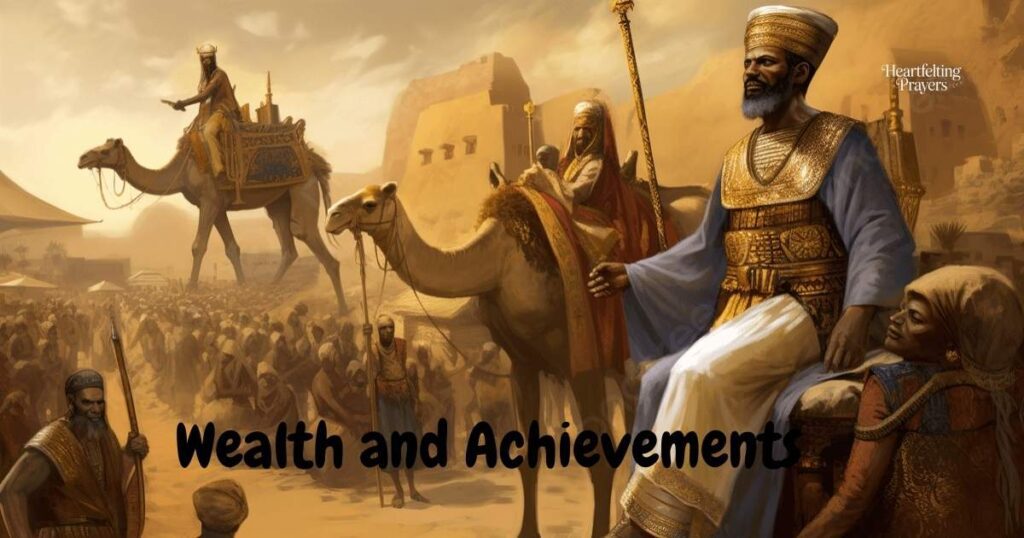
Mansa Musa’s wealth was renowned, especially for his enormous gold reserves. His reign saw an unprecedented expansion of urban development and architecture. He sponsored the construction of numerous mosques and madrasas across his empire, particularly in Gao and Timbuktu. The most famous of these was the Sankore Madrasah, which later became part of the University of Sankore. Under Musa, the library at Timbuktu reportedly held around 1 million manuscripts, rivaling the legendary Library of Alexandria.
He also built the Djinguereber Mosque in Timbuktu, collaborating with Spanish and Egyptian architects. His investments in education, urban planning, and trade helped transform Mali into a center of culture, commerce, and Islamic scholarship. Timbuktu became a key trading hub, recognized even in southern European cities like Venice and Genoa.
Reign and Influence
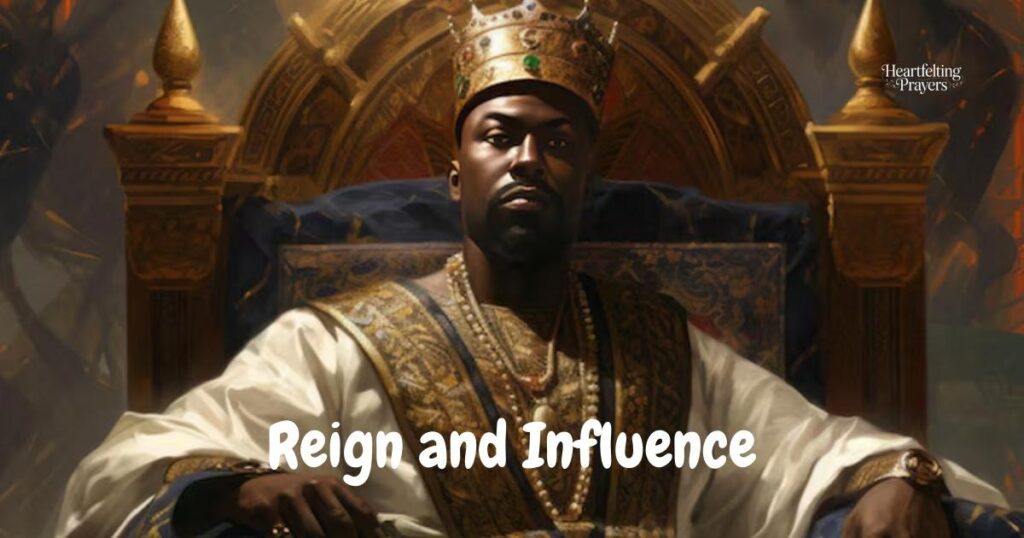
Mansa Musa’s rule is often described as Mali’s golden age, though some scholars note that this period is better documented in Arabic sources rather than necessarily being the richest era of Mali. Musa expanded the empire, incorporating key cities like Timbuktu and Gao, while promoting urban living and cultural development. He is remembered as a devout Muslim, a patron of education, and a ruler whose generosity and intelligence earned praise from Arabic writers of the era.
During his rule, Mansa Musa expanded the borders of the Mali Empire, bringing important cities such as Timbuktu and Gao firmly under his control as he traveled through the region. In Timbuktu, he commissioned the construction of his grand palace and the famous Djinguereber Mosque, working with skilled architects from Spain and Egypt. Under Musa’s leadership, Timbuktu grew into a major center for trade, culture, and Islamic learning.
Mansa Musa placed great importance on education, and during his reign, the University of Sankore flourished. Its library became one of the largest in the world at the time, housing an estimated one million manuscripts, often compared to the legendary Library of Alexandria. Timbuktu’s growing reputation was so strong that European trading cities such as Venice and Genoa began including it in their commercial networks.
Musa’s reign is often described as the golden age of the Mali Empire. However, some historians suggest this label may be influenced by the fact that his era was better documented by Arabic scholars, rather than proving that he was definitively the most powerful or wealthiest ruler Mali ever had.
Death
The exact date of Mansa Musa’s death remains uncertain. Some historians place it in 1337, while others argue he died earlier, perhaps shortly after returning from Mecca. Another theory suggests he was alive during the construction of Tlemcen in Algeria in 1337. Despite the uncertainty, his influence persisted long after his death, shaping Mali’s cultural and economic landscape.
Pop Culture
Mansa Musa’s legacy continues to influence modern culture. He is featured in video games like Civilization IV and its expansion, Civilization IV: Gathering Storm. He was portrayed in YouTube’s Epic Rap Battles of History episode “Jeff Bezos vs. Mansa Musa,” performed by rapper Scru Face Jean. Additionally, American musician Anderson .Paak referenced him in his album Oxnard.
Comparison with Modern Billionaires
After adjusting for inflation, Mansa Musa is widely considered the richest person in human history, with a net worth of $400 billion. This surpasses Elon Musk ($340 billion as of September 2021), John D. Rockefeller ($340 billion), and Andrew Carnegie ($310 billion). His wealth, primarily in gold, was unmatched in scale and influence, making him an unparalleled figure in world history.
FAQ’s
Who was Mansa Musa?
Mansa Musa was the 10th ruler of the Mali Empire, reigning from 1312 to 1337. He was one of the most powerful and influential leaders in West Africa and is widely regarded as the richest person in human history.
What was Mansa Musa net worth?
After adjusting for inflation, Mansa Musa net worth is estimated at around $400 billion, making him wealthier than modern billionaires like Elon Musk, John D. Rockefeller, and Andrew Carnegie.
Why was Mansa Musa so wealthy?
Mansa Musa’s wealth came mainly from Mali’s vast gold reserves. During his reign, Mali controlled major gold mines and important trade routes, allowing him to accumulate immense riches.
Why is Mansa Musa’s pilgrimage to Mecca famous?
His pilgrimage in 1324 is famous because he traveled with tens of thousands of people and distributed so much gold that it caused the value of gold to drop in cities like Cairo and Medina.
What is Mansa Musa’s legacy today?
Mansa Musa is remembered for turning Timbuktu into a global center of trade, education, and Islamic scholarship. His support for architecture, learning, and culture left a lasting impact on African and world history.
Conclusion
Mansa Musa’s extraordinary wealth remains unmatched in recorded history. Mansa Musa net worth of $400 billion in today’s terms, his fortune was built on Mali’s vast gold resources and control of key trade routes across Africa. Unlike modern billionaires whose wealth is measured through companies and assets, Musa’s riches directly influenced global economies, as seen during his famous pilgrimage to Mecca, where his generosity affected gold prices across entire regions. His wealth was not just a symbol of luxury but a reflection of Mali’s economic power under his rule.
Beyond his immense fortune, Mansa Musa’s career as a ruler defined the golden age of the Mali Empire. During his reign from 1312 to 1337, he expanded the empire, strengthened trade, and transformed cities like Timbuktu into centers of education, culture, and Islamic scholarship. His investments in mosques, universities, and libraries helped shape Mali into one of the most advanced civilizations of its time. Mansa Musa’s legacy endures not only because of his wealth but because of the lasting cultural, economic, and intellectual foundation he built for future generations.

Mason Hart is the lead writer at HeartfeltingPrayers, with extensive experience in crafting heartfelt and inspiring prayers. He specializes in creating messages that bring comfort, hope, and spiritual encouragement to readers. Combining empathy, insight, and a deep understanding of faith, Mason’s work helps individuals connect with their spirituality, find peace in everyday moments, and experience the uplifting power of meaningful prayer.